
56% of Irish CEOs Say Maintaining Profit Is a Major Challenge in 2026 - What It Means for Manufacturers
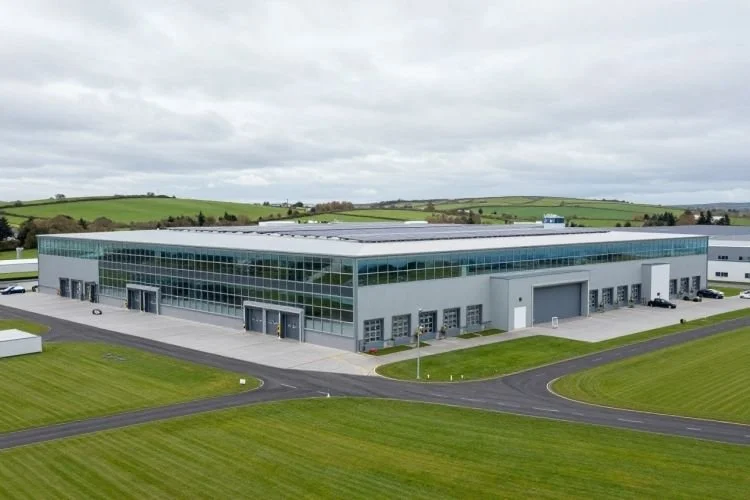
84% of Irish manufacturing CEOs expect the cost of doing business to rise again in 2026. The data from the Ibec CEO Survey makes for important reading.
The IBEC CEO Survey 2026 is one of the most useful barometers of where Irish business confidence actually sits. Surveying over 200 CEOs and business leaders between late 2025 and early 2026, it does not deal in vague sentiment. It puts hard numbers on the challenges that are keeping business leaders up at night.
And for manufacturers, those numbers are worth paying close attention to.
The headline finding
Across all sectors, 56% of CEOs identified maintaining profit margins as a major challenge for 2026. That figure has been climbing steadily, up from 50% the previous year. When you look at the manufacturing sector specifically, it rises even further, with 72% of manufacturing CEOs flagging it as a major concern compared to 45% in services.
That gap is significant. It tells you that manufacturers are feeling the squeeze in a way that is more acute than the broader business population. They are dealing with a combination of input cost inflation, labour pressures and tighter margins on the products they are selling, and those pressures are not showing much sign of easing.
The cost of doing business is not going away
Almost all firms surveyed, 91%, reported an increase in the cost of doing business in 2025. Looking ahead, 85% expect costs to rise again in 2026. For manufacturers, that figure sits at 84%, a marginal improvement on the overall average but still representing the overwhelming majority of the sector.
Input cost inflation was identified as a major challenge by 61% of manufacturers, compared to 39% in services. These are businesses that buy raw materials, run heavy machinery, manage complex supply chains and operate facilities that consume substantial amounts of energy. Every cost increase along that chain compounds.
The survey also shows that only 35% of manufacturers reported an increase in profitability in 2025, despite 58% seeing turnover growth. That gap between revenue and profit is exactly where rising costs are doing their damage.
Where energy fits into this picture
Energy costs were identified as an internal priority by 19% of CEOs overall in 2026, nearly double the figure from two years ago. For manufacturers, that number sits at 25%, reflecting the reality that energy is a significant operational cost in production environments.
This makes sense. Manufacturing facilities run equipment, compressed air systems, HVAC, refrigeration, lighting and process heat, often around the clock. Energy consumption in a manufacturing setting is not incidental. It is built into every hour of production, and when energy prices rise, it hits directly at the bottom line.
What the data does not show, but what we see consistently in practice, is how much of that energy spend is avoidable. A significant portion of what manufacturers pay in energy bills can be attributed to inefficiency rather than output. Ageing equipment, poorly calibrated systems, suboptimal scheduling and a lack of real-time visibility into consumption patterns all contribute to costs that do not need to be there.
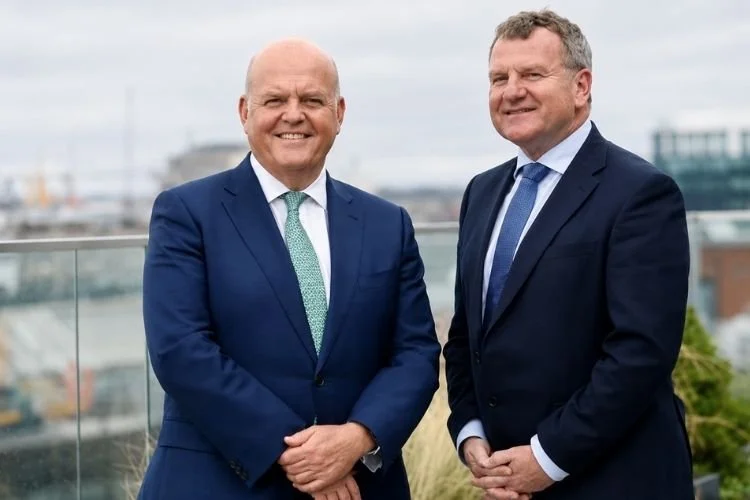
Colin Hunt, Ibec's new president and Ibec CEO Danny McCoy
What manufacturers can do now
The Ibec survey points to improving productivity as the top internal priority for manufacturers in 2026, cited by 84% of respondents. Energy efficiency sits squarely within that agenda. Reducing what you spend to produce the same output is productivity in its most straightforward form.
The starting point for most manufacturers is understanding where energy is actually going. Without that visibility, it is very difficult to know which interventions will have the most impact. An energy audit provides exactly that, and depending on your annual energy spend, it may be fully funded. Businesses spending less than €150,000 on energy annually can access support through their Local Enterprise Office, while those above that threshold may be eligible under SEAI programmes.
The cost environment Irish manufacturers are operating in right now is genuinely difficult, and the Ibec data confirms that. But energy is one of the few significant cost lines where meaningful reductions are achievable relatively quickly, without waiting on policy changes or market conditions to shift.
If it is something you have been meaning to look at, 2026 is the year to do it.
You can see the full report here: https://www.ibec.ie/connect-and-learn/media/2026/03/05/ceos-anticipate-further-easing-in-job-growth-but-overall-business-sentiment-remains-solid