
New Food Safety Authority Regulations for Food Manufacturers in Ireland - What You Need to Know
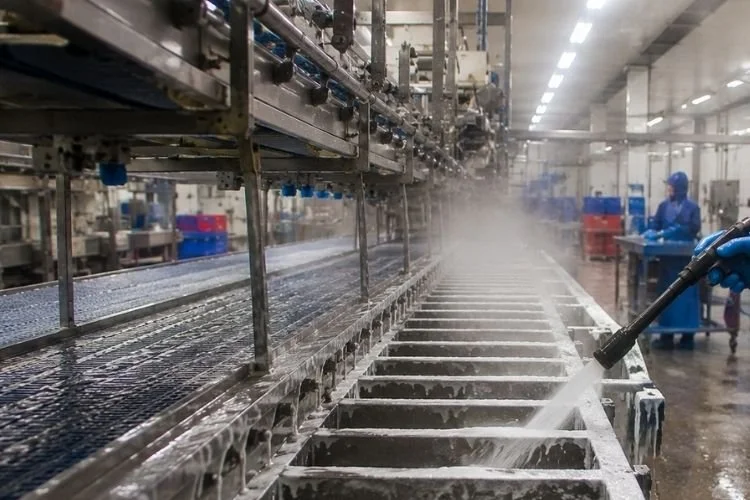
Sanitation is more important than ever for food manufacturers
New EU regulations on the control of Listeria monocytogenes in ready-to-eat foods came into effect on 1 July 2026. The Food Safety Authority of Ireland issued guidance to food businesses on the same day, making clear that compliance is now a legal requirement and not something that can be deferred.
For Irish food manufacturers producing ready-to-eat products, this is a significant development. The new rules raise the bar on microbiological standards, require more sensitive testing methods and place a clear responsibility on manufacturers to have robust food safety management procedures in place.
What Has Changed
Listeria monocytogenes is a bacterium that can cause a serious illness called listeriosis. It is of particular concern for vulnerable groups including pregnant women, infants, older adults and people with weakened immune systems. It is primarily transmitted through contaminated food and, critically, it can grow slowly at refrigeration temperatures, meaning it has the potential to reach unsafe levels in certain foods during storage if conditions are not properly controlled.
The new rules tighten the permitted limit for Listeria monocytogenes in ready-to-eat foods that are able to support its growth. This limit now applies when a product is placed on the market and throughout its entire shelf life. Compliance requires the use of a more sensitive microbiological test method capable of detecting the bacterium at lower levels than was previously required.
The FSAI has been direct about what this means in practice. Food businesses that do not have robust procedures in place for managing the risk of Listeria monocytogenes may see more product recalls in the coming months as the stricter testing regime is applied. That is a serious operational and reputational risk for any manufacturer in the ready-to-eat space.
Why This Matters Beyond Food Safety
The new regulations are fundamentally about food safety, and that should remain the primary focus for any manufacturer working through compliance. But it is worth understanding that effective Listeria control is not just about testing and labelling. It is about how a facility is managed at a very practical level, and that includes temperature control.
Listeria monocytogenes is unusual among food pathogens in its ability to survive and grow at refrigeration temperatures. That makes the consistent, reliable performance of refrigeration and cold storage systems critical for any manufacturer of ready-to-eat products. A refrigeration unit that is running inefficiently, cycling at inconsistent temperatures or failing to maintain the correct environment throughout a storage area is not just an energy problem. Under the new rules, it is a compliance problem.
For food manufacturers, this creates a direct link between energy management and food safety. The two are not separate conversations.

New EU regulations on Listeria monocytogenes in ready-to-eat foods came into effect on 1 July 2026
Why This Is Relevant to Energy
Temperature control is at the heart of Listeria management. And temperature control is fundamentally an energy issue. What makes Listeria monocytogenes particularly challenging is that it is ubiquitous. It is found naturally in soil, water and animal feed, meaning it can enter a food manufacturing facility through raw materials, people, equipment and the environment itself. The question is never really whether it is present. It is whether the conditions exist for it to grow and reach unsafe levels. That is where energy management becomes directly relevant, across three key areas of the facility.
Refrigeration
Listeria monocytogenes is unique among food pathogens in its ability to survive and grow at refrigeration temperatures. That makes the consistent, reliable performance of cold storage systems more critical than ever under the new rules. A refrigeration unit that is cycling inconsistently, running at reduced efficiency or failing to maintain the correct temperature throughout a storage area is not just an energy problem. It is a direct compliance risk. Manufacturers will need greater confidence that their cold chain is performing as intended, and that means having proper visibility into how those systems are actually operating day to day.
Ventilation
Processing environments for ready-to-eat foods require careful control of airflow and temperature to minimise the risk of contamination. The new regulations place a greater emphasis on demonstrating consistent environmental control throughout production, which puts ventilation systems under closer scrutiny. Poorly performing or inefficiently designed ventilation not only drives up energy costs but can create temperature differentials and condensation issues within a facility that increase the risk of Listeria establishing itself in hard to reach areas. Getting ventilation right is both an energy efficiency and a food safety conversation.
Sanitation
Effective sanitation programmes in food manufacturing facilities rely heavily on hot water systems and clean in place infrastructure, both of which are significant energy consumers. Under the new Listeria regulations, the frequency and rigour of cleaning and sanitation procedures is likely to increase for many manufacturers, particularly in facilities producing high risk ready-to-eat products. That increased activity has a direct impact on energy demand. Understanding your baseline energy consumption across sanitation processes is an important starting point for managing those costs as compliance requirements tighten.
What Food Manufacturers Should Be Doing Now
The immediate priority is understanding your obligations under the new regulations and ensuring your food safety management procedures are fit for purpose. The FSAI guidance is the right starting point for that.
But alongside the food safety review, it is worth taking a close look at the infrastructure that underpins your cold chain and temperature controlled environments. If you have not had a formal assessment of your refrigeration, ventilation and sanitation energy systems, now is a reasonable time to consider it.
Depending on your annual energy spend, there may be fully funded support available through the SEAI or your Local Enterprise Office to cover the cost of an energy audit. Either way, the findings are likely to be relevant both to your energy bills and to your compliance position under the new regulations.
If it is something you would find useful to explore, the team at Watt Footprint is happy to have that conversation.
In a market where operational excellence is the key return driver, energy management is not a nice to have. It is part of the job.