
What the Teagasc 2026 Farm Income Report Tells Us About Energy Efficiency in Food and Beverage Manufacturing

According to the Teagasc 2026 farm income report, rising energy and input costs are putting pressure on Irish farm margins. That pressure does not stay on the farm
A new report from Teagasc published this month sets out a challenging outlook for Irish farm incomes in 2026. Average family farm income is forecast to fall to approximately €33,600 this year, down 38% on the €53,800 average recorded in 2025. The reasons are a combination of lower output prices in dairy and cattle and rising input costs across the board.
For food and beverage manufacturers, that combination matters. When farm margins tighten, pressure moves up the supply chain. And one of the key drivers of that pressure right now is energy.
What This Blog Covers
What the Teagasc 2026 farm income report shows
How rising farm costs feed into food and beverage manufacturing
Why energy prices in food and beverage manufacturing are a growing pressure point
What energy efficient manufacturing looks like in practice
Where Irish food and beverage businesses can get support
What the Teagasc 2026 farm income Report Shows
Agricultural input markets have been under renewed upward pressure in 2026. Energy, labour and other non-feed costs rose 10 to 13% across farm systems, while fertiliser prices have also increased on the back of higher energy costs. Feed costs remain above long-term averages. Dairy farm income is forecast to fall to approximately €78,000 in 2026, down from a record €153,300 in 2025, a decline of 49%. Average income on cattle rearing farms is forecast to fall to approximately €19,000, down from €24,100 in 2025.
These are significant shifts for primary producers. But the story does not end at the farm gate.
How rising farm costs feed into food and beverage manufacturing
Irish food and beverage manufacturers rely on domestic farm output as a primary input. Dairy processors, meat processors, prepared consumer food producers and drinks manufacturers are all directly connected to what happens at farm level. When the cost of producing raw materials rises, that cost does not disappear. It gets absorbed somewhere in the supply chain, and more often than not processors find themselves caught between rising input costs and the difficulty of passing those costs on to retail buyers and consumers.
Recent increases in energy, fertiliser and supply chain costs are already contributing to elevated production costs. Even if geopolitical tensions ease, the cost pressures already absorbed by food businesses are likely to pass through to consumer food prices in the months ahead. At the same time, up to 38% of Irish consumers report feeling less financially secure than a year ago, while 54% say they are buying fewer items to reduce costs. That makes passing on cost increases to consumers more difficult than it might otherwise be.
The result is a squeeze that is being felt at every level of the food and beverage supply chain, and energy prices in food and beverage manufacturing sit right at the centre of it.
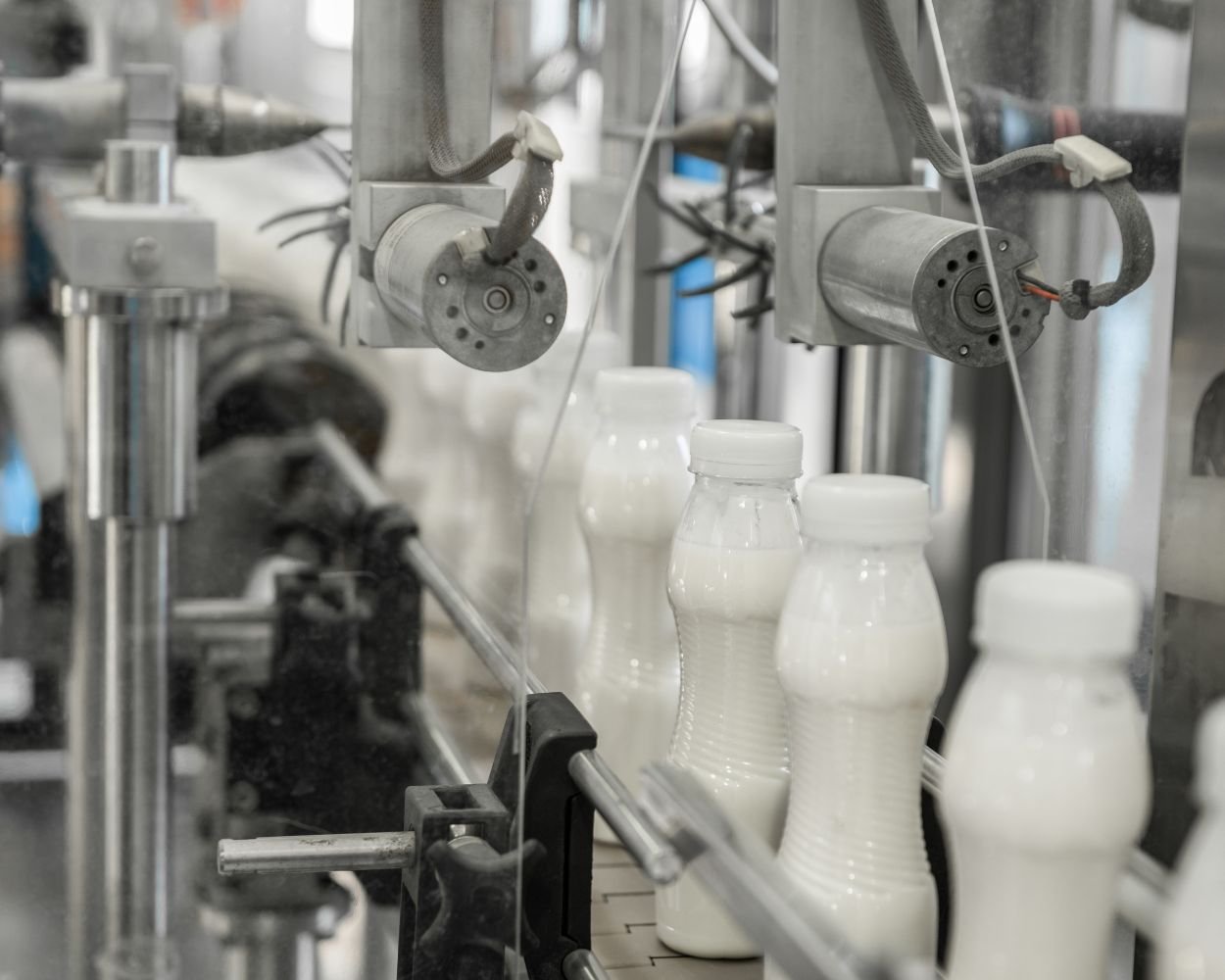
Irish dairy farmers are facing one of their most challenging years in recent memory according to the Teagasc 2026 report
Why energy prices in food and beverage manufacturing are a growing pressure point
Wage costs, raw material prices and global commodity markets are largely outside the control of individual food and beverage manufacturers. Energy is different. It is one of the few significant cost lines where structured management and investment in energy efficiency in the food and beverage sector can deliver real, sustained savings.
Food Drink Ireland's latest Business Monitor shows the underlying cost base for Irish food processors remains elevated, driven by persistent volatility in global commodity markets, escalating energy costs and sustained pressure on agricultural inputs. Energy is named explicitly alongside raw materials and transport as one of the primary cost pressures facing the sector right now.
The businesses that are best placed in this environment are those that have already taken a structured look at where their energy is going and what is driving their bills. For many food and beverage processors, energy is consumed across refrigeration, heating, ventilation, compressed air, process equipment and building services. These systems are often poorly monitored and rarely optimised. The savings available through a structured approach to energy efficient manufacturing are frequently more significant than businesses expect.
What energy efficient manufacturing looks like in practice
Energy efficient manufacturing in the food and beverage sector is not about one project or one technology. It is about building a foundation of visibility and managing from there.
The starting point is always understanding your baseline. Knowing where energy is being consumed, how efficiently key systems are running and what the relationship is between production volume and energy use gives you the information needed to make good decisions. Without that foundation, investment decisions are harder to justify and savings are harder to verify.
From there, the most impactful areas for food and beverage manufacturers typically include refrigeration systems, which are among the largest energy consumers on most food processing sites and often running less efficiently than they should be. Process heating and hot water systems, compressed air generation, ventilation and building management systems are also consistently high-value areas. In each case, a structured assessment will identify where the biggest opportunities are and what the financial return on investment looks like.
For larger sites, achieving ISO 50001 Energy Management Certification provides a framework for embedding energy management into how the business is run rather than treating it as a one-off exercise. It also provides independently verified savings data, which is increasingly valuable for sustainability reporting and supply chain compliance requirements.
Where Irish food and beverage businesses can get support
The good news for Irish food and beverage manufacturers is that support is available to help with the cost of getting started. Depending on your annual energy spend, there may be funded options available through the SEAI or your Local Enterprise Office to cover an energy audit and help you understand where the opportunities are for your specific site.
Every engagement Watt Footprint has with a new client starts with a free consultation to understand the specific situation, what the business is currently spending, where the opportunities are and what the right path forward looks like. Every site is different and there is no one-size-fits-all solution.
If it is something you would find useful to explore, the team at Watt Footprint is happy to have that conversation.