
Why Your Pharmaceutical Abatement Systems Could Be Costing More Than They Should
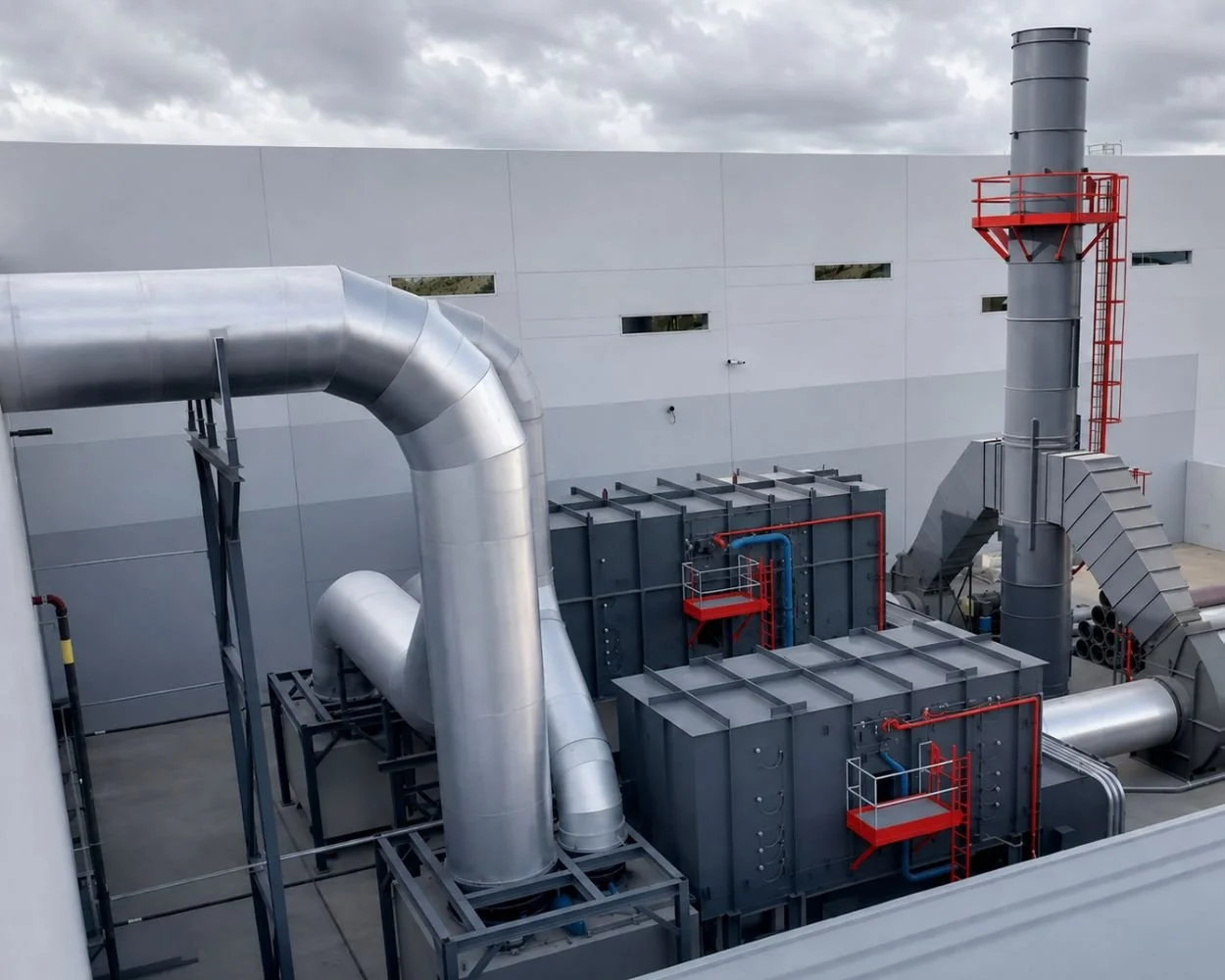
Pharmaceutical VOC Abatement systems have a huge energy output
If you operate a pharmaceutical manufacturing site in Ireland, there is a good chance your VOC abatement system has been running quietly in the background for years, doing its job, meeting its permit conditions, and rarely getting a second look. That is understandable. These systems were installed to solve a compliance problem, and once they are in place and performing, the instinct is to leave them alone.
But the 2026 Chemical Agents Code of Practice, which came into operation in April of this year, is prompting a fresh round of reviews across manufacturing sites in Ireland. For pharmaceutical manufacturers in particular, where solvent use is significant and abatement systems are a core part of site infrastructure, now is a good moment to look at these systems not just through a compliance lens but through an energy efficiency lens too.
What This Blog Covers:
What changed with the 2026 Chemical Agents Code of Practice
Why abatement systems are relevant to that conversation
The energy cost that sits inside your abatement setup
What improved energy performance looks like in practice
How Irish pharma manufacturers are already making progress
Where to start if you want to explore this further
What Changed With the 2026 Chemical Agents Code of Practice
The 2026 Code of Practice, published by the Health and Safety Authority and in operation since 9 April 2026, replaces the previous 2024 version. It provides updated guidance on compliance with the Safety, Health and Welfare at Work (Chemical Agents) Regulations and incorporates changes introduced under S.I. No. 127 of 2026 and the amended Carcinogens, Mutagens and Reprotoxic Substances Regulations.
In practical terms, the key shifts for manufacturing sites are:
Occupational exposure limit values (OELVs) have been revised for a range of substances, meaning historical risk assessments may no longer reflect current requirements
There is a significantly greater emphasis on documentation and evidence. A risk assessment on file is not sufficient on its own. The HSA expects to see evidence that controls are in place, functioning, and being reviewed
Stricter limits have been introduced for specific substances including diisocyanates and inorganic lead, with further tightening expected in the coming years
Contractor and maintenance activity is now more explicitly within scope, meaning the chemicals introduced during servicing or cleaning operations also need to be assessed
For pharmaceutical manufacturers, where solvents such as ethanol, isopropanol, acetone and methanol are used throughout synthesis, purification, coating and cleaning processes, this update reinforces the need to have a clear, current picture of how solvent emissions are being controlled on site.
Why Abatement Systems Are at the Centre of This
Engineering controls sit at the top of the hierarchy of hazard management. Where solvent vapours cannot be eliminated from a process, the expectation is that they are captured and treated before they can reach workers or escape to the atmosphere. That is precisely what abatement systems do.
The most common technology in large pharmaceutical facilities is the Regenerative Thermal Oxidiser, or RTO. RTOs work by drawing solvent-laden air from the process, heating it to temperatures typically between 800 and 1,000 degrees Celsius, and destroying the VOCs through high-temperature combustion. They are highly effective, achieving destruction efficiencies above 99% in most applications, and they are a well-established solution in Irish pharma.
Other technologies in use include catalytic oxidisers, which operate at lower temperatures using a catalyst to drive the combustion reaction, and activated carbon adsorption systems, which capture solvents onto a carbon bed and can enable solvent recovery and reuse.
The 2026 Code of Practice does not change which technology a site uses. But it does sharpen the focus on whether those systems are performing as intended, whether controls are documented, and whether ongoing monitoring is in place. That review process creates a natural opportunity to also ask a second question: is this system running as efficiently as it could be?
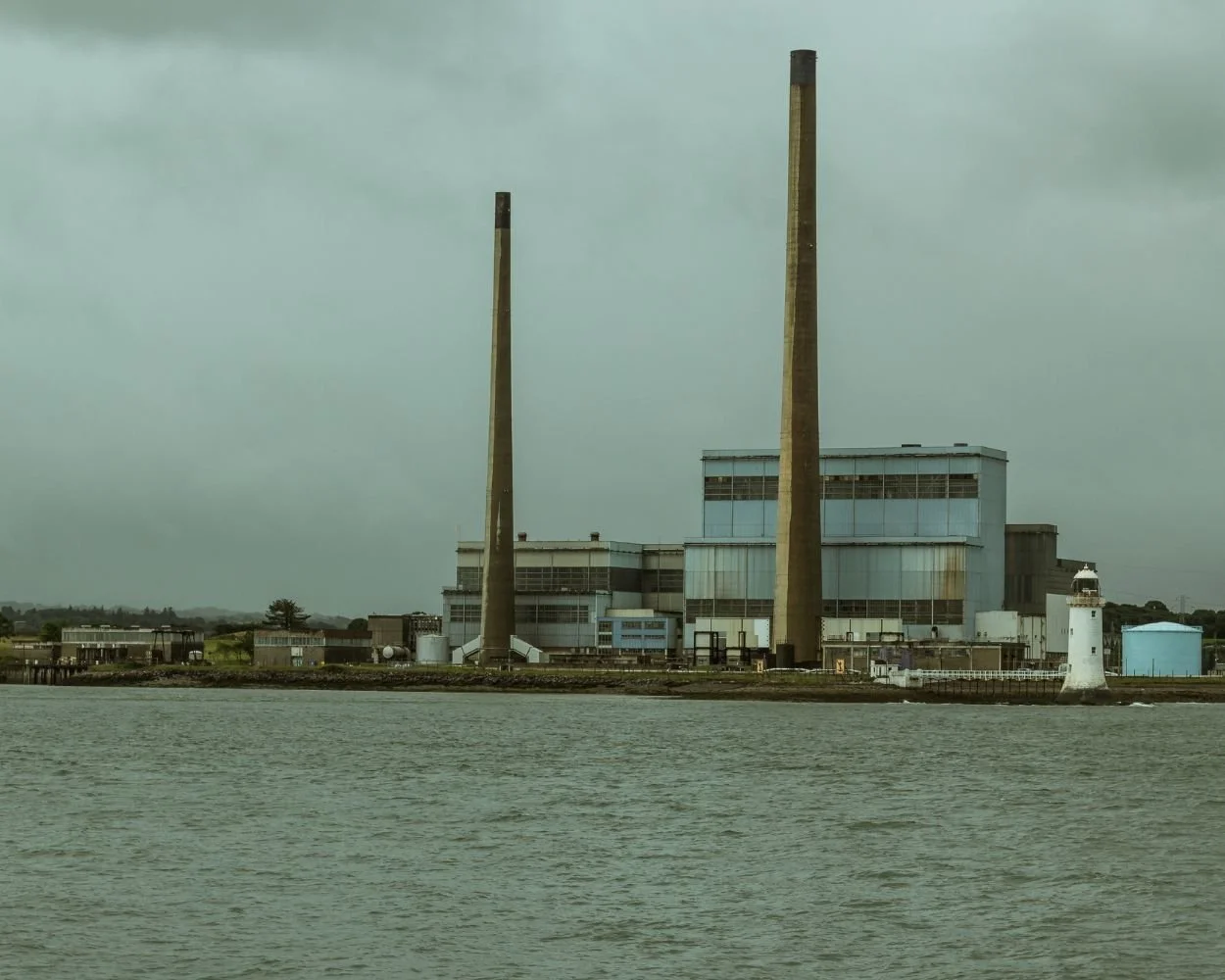
VOC Abatement systems are proving a reduction in VOCs in ireland
The Energy Cost That Sits Inside Your Abatement Setup
This is where energy efficiency in pharmaceutical manufacturing becomes directly relevant, and it is an area that does not always get the attention it deserves.
RTOs are significant energy consumers. Maintaining combustion temperatures of 800 to 1,000 degrees Celsius requires a sustained gas input, and on a large pharma site an RTO can account for a meaningful portion of total site energy spend. Modern RTOs use ceramic heat recovery beds to capture and recycle heat from the combustion process, achieving thermal efficiencies above 95% in well-maintained systems. But efficiency degrades over time if systems are not properly maintained, correctly sized for current process loads, or optimised for the actual VOC concentrations they are treating.
Some of the most common energy performance issues seen in abatement systems include:
Systems that were sized for a higher production throughput than currently exists, meaning they are running larger than necessary for the actual load
Airflow rates that are set higher than required, drawing in excess dilution air and increasing the energy needed to maintain treatment temperatures
Heat recovery performance that has declined due to fouling or degradation of ceramic media
Systems running continuously when production schedules would allow for managed downtime
None of these are compliance failures in isolation. But they represent real energy cost that sits inside a system most sites treat as a fixed overhead. Improved energy performance in abatement does not require replacing the technology. It often starts with understanding how the system is actually operating relative to how it was designed to operate.
What Improved Energy Performance Looks Like in Practice
Energy efficient abatement systems are not a different category of technology. They are the same systems, operated with better visibility and more deliberate control.
In practice, improved energy performance in this area tends to involve a few things. The first is metering and monitoring. Understanding exactly how much energy your abatement system is consuming, and when, is the starting point for identifying where savings are possible. Many sites have good visibility of overall energy use but limited insight into the consumption of individual systems like RTOs.
The second is operational review. Looking at whether airflow rates, combustion temperatures and run schedules are still appropriate for current production demands. In some cases, process changes over the years have altered the VOC load significantly, but the abatement system has continued to run at its original settings.
The third is maintenance. Ceramic heat recovery media degrades over time and fouling reduces thermal efficiency. A system that was achieving 95% thermal efficiency at installation may be operating considerably below that after several years without targeted maintenance.
These are areas where energy management expertise and process knowledge intersect, and where the conversation about compliance and the conversation about cost reduction can usefully happen at the same time.
How Irish Pharma Manufacturers Are Already Making Progress
It is worth noting that the Irish pharmaceutical sector as a whole is moving in the right direction. The BioPharmaChem Ireland Sustainability and Responsible Care Report 2026 showed that VOC emissions across the sector are down 23% over a three year period, alongside a sustained reduction in total energy consumption. That progress reflects improvements in solvent control, better process monitoring and a sector-wide focus on environmental performance.
The goal for individual sites is to understand where they sit within that picture and what is driving their own performance. For some, abatement systems will already be well managed and performing efficiently. For others, there may be meaningful savings available that have not yet been looked at.
Where to Start If You Want to Explore This Further
The compliance review prompted by the 2026 Chemical Agents Code of Practice is a reasonable starting point. If your site is revisiting its solvent management controls, chemical risk assessments and engineering control documentation as part of that process, it is worth including your abatement systems in that scope and asking the energy efficiency question at the same time.
Understanding the energy performance of your abatement setup does not require a major project. It starts with visibility, looking at consumption data, reviewing operating parameters, and benchmarking current performance against design specifications.
Depending on your site's annual energy spend, there may also be funded support available through the SEAI or your Local Enterprise Office to help with energy audits and improvement projects.
If it is something you would find useful to explore, the team at Watt Footprint is happy to have that conversation.