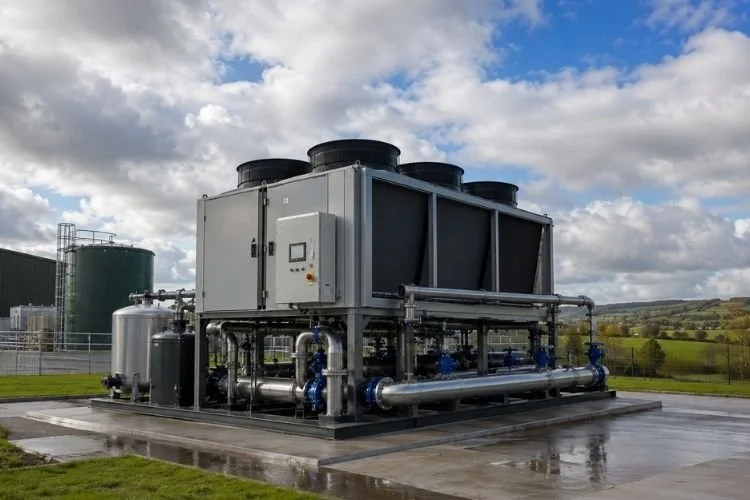
Industrial closed-loop water system installed at a food manufacturing facility in Ireland
How closed water loop systems help food manufacturers reduce costs, cut wastewater discharge, and meet sustainability targets. A concise guide to getting started.
What Is a Closed Water Loop?
A closed water loop is a system in which water used during food production is captured, treated, and recirculated back into the process rather than discharged to drain. Instead of the traditional take, use, dispose approach, water is reused across multiple process steps, significantly reducing freshwater intake and effluent output.
For food manufacturers, this means lower operating costs, reduced compliance risk, and stronger sustainability credentials.
Why It Matters Now
Water costs are rising. Tariffs are increasing across Europe and water abstraction licences are harder to obtain in many regions. Reducing consumption directly reduces overheads.
Discharge regulations are tightening. Food process effluent carries high BOD, COD, and FOG loads. Consent limits are getting stricter, and non-compliance penalties are being enforced more firmly.
Retailers and buyers expect it. Sustainability audits, ESG scorecards, and Scope 3 reporting are now standard in supplier qualification. Demonstrable water reduction strengthens commercial relationships.
How It Works
Closed loop systems are built around four principles: segregating waste streams by quality, applying the appropriate level of treatment, monitoring water quality before reuse, and redistributing treated water to compatible process points.
Common reuse applications include CIP pre-rinse, equipment wash-down, cooling tower make-up, and boiler feed. Product contact reuse is possible in some cases but requires regulatory approval and a full HACCP assessment.
Key Technologies
Dissolved Air Flotation (DAF) removes suspended solids, fats, and oils and is typically the first treatment stage. Output is suitable for non-product-contact reuse.
Membrane Bioreactors (MBR) combine biological treatment with membrane filtration to produce high-quality water suitable for a wider range of reuse applications, in a compact footprint.
Reverse Osmosis (RO) produces high-purity water for boiler feed or, where permitted, product contact use.
Condensate Recovery is often the simplest starting point. Steam condensate is clean, hot, and ready to reuse with minimal treatment, delivering fast payback on water, chemical, and energy costs.
Getting Started
A water audit is the right first step. It maps consumption and discharge across your site, identifies the highest-value reuse opportunities, and builds the evidence base for investment decisions.
From there, most manufacturers implement in phases, starting with condensate recovery and CIP optimisation before investing in full treatment infrastructure. Payback periods of 2 to 5 years are typical for well-designed systems.
Water-as-a-service financing options are available for sites where upfront capital is a constraint.
What Manufacturers Are Achieving
Facilities with well-implemented closed loop systems typically report:
20 to 60% reduction in freshwater intake
30 to 70% reduction in trade effluent discharge volumes
Meaningful energy savings through hot water and condensate recovery
Improved performance in retailer sustainability audits
Frequently Asked Questions
Are closed water loops suitable for smaller manufacturers? Yes. Packaged, scalable systems exist for mid-size sites. A water audit will confirm whether the economics stack up for your specific volumes and tariff rates.
What is the difference between a closed loop and zero liquid discharge (ZLD) A closed loop reduces discharge significantly but may not eliminate it entirely. ZLD removes all liquid effluent and is more capital-intensive, typically reserved for sites where discharge is prohibited or water has very high scarcity value.
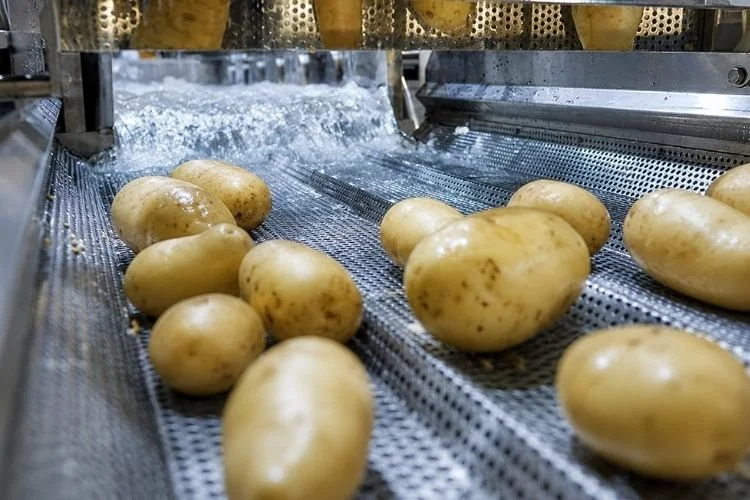
Food Manucturing requires large amounts of water usage
A Note for Food Manufacturers in Ireland
Ireland's food and beverage sector is one of the most water-intensive in Europe, with dairy processing, meat production, and beverage manufacturing all placing significant demand on water resources and wastewater infrastructure.
Uisce Éireann (Irish Water) manages trade effluent licensing for manufacturers connected to the public sewer network. Licence conditions set limits on discharge volumes, BOD, COD, and suspended solids, and these are reviewed and tightened over time. Reducing discharge volume and strength through closed loop systems directly reduces exposure to licence breaches and associated costs.
The Environmental Protection Agency (EPA) oversees Integrated Pollution Control (IPC) and Industrial Emissions (IE) licences for larger food manufacturing sites. Water use efficiency and wastewater management are increasingly scrutinised as part of licence reviews and renewals.
On the funding side, Enterprise Ireland supports capital investment in sustainability and resource efficiency projects through a range of grant schemes. The Green Transition Fund and Agile Innovation programmes have both been used by food manufacturers to part-fund water recycling infrastructure. It is worth engaging with Enterprise Ireland early in your project planning to understand what support may be available.