
New stats on Hotel and Restaurant spending in Ireland show a plateau
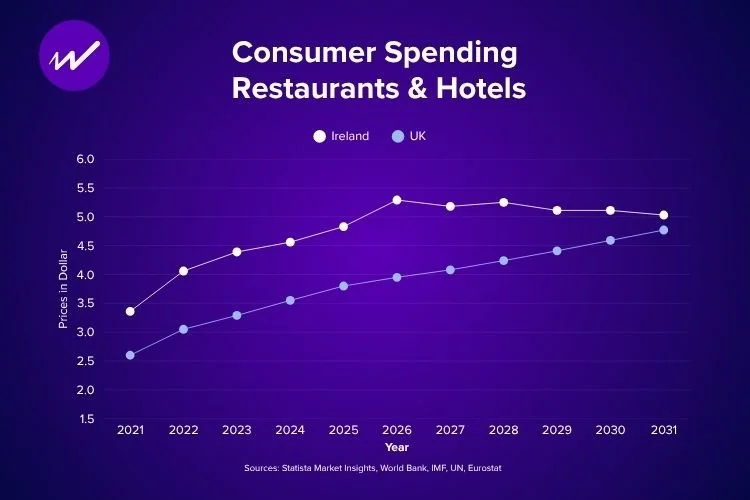
Chart showing consumer spending on restaurants and hotels in Ireland and the UK from 2021 to 2031, sourced from Statista
If you run a restaurant, hotel, or hospitality business in Ireland, the last few years have probably felt good. New data from Statista Market Insights, drawing on World Bank, IMF, UN, and Eurostat figures, shows just how strong that growth has been.
The Numbers Tell a Clear Story
Consumer spending on restaurants and hotels in Ireland climbed from 3.36 thousand USD per capita in 2021 to a projected peak of 5.29 thousand in 2026. That's a jump of nearly 60 percent in five years. The UK saw similar momentum, rising from 2.6 thousand to 3.95 thousand over the same period, though starting from a lower base and growing at a steadier pace.
Here's the part that should catch the attention of any business owner in the sector: the growth doesn't continue at that same rate. After 2026, Ireland's figures are forecast to plateau and even dip slightly, moving from 5.29 down to 5.03 by 2031. The UK keeps climbing but at a slower, flatter incline than the years before it.
In plain terms, the post-pandemic surge in dining out and hotel stays is settling into something more mature and more competitive. Revenue growth from consumer demand alone is no longer something businesses in this sector can rely on the way they could between 2021 and 2026.
Where This Leaves Margins
When top-line growth slows, the businesses that come out ahead are usually the ones that got their cost base in order while the good times were rolling. And for restaurants and hotels, one of the biggest and most controllable costs sitting under the surface is energy.
Kitchens, laundry facilities, HVAC systems, hot water demand, and 24-hour operations make hospitality one of the most energy-intensive sectors per square foot. Energy price volatility over the past few years has already squeezed margins even during a period of strong revenue growth. As that revenue growth flattens out, energy costs that were once absorbed by rising sales will start to show up directly on the bottom line.
This is exactly the moment when energy efficiency stops being a nice-to-have and becomes a competitive necessity.
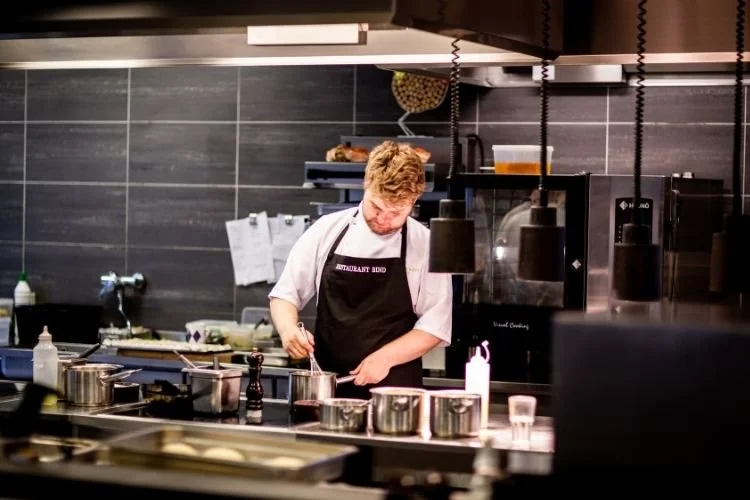
Restaurant profits can be protected through energy efficiency
This Echoes What We're Already Seeing at the Investment Level
This pattern isn't unique to consumer spending data. We wrote recently about the Savills European Hotel Investment Outlook 2026, which found much the same story from the investment side of the business. Revenue growth across European hotels is slowing, and the spread between entry yields and the cost of debt has narrowed to the point where returns can no longer be built on rising sales alone. Savills points to operational excellence, and specifically cost control, as the lever that now separates strong performers from average ones.
Energy sits right at the centre of that. It's one of the only major cost lines a business can actually influence day to day, unlike wages or rent, which are largely fixed once a property is fully staffed. The Statista consumption data and the Savills investment research are pointing at the same underlying shift from two different angles: the easy growth phase is ending, and the businesses that protect their margins now, mainly through energy costs, will be the ones still performing well when spending flattens out completely.
Why Now Is the Time to Act
A business that invests in energy efficiency during a growth plateau is protecting its margin rather than chasing more revenue to cover rising costs. That could mean:
An energy audit to identify where waste is highest, often kitchen equipment, refrigeration, and heating systems in older properties
Upgrading to more efficient HVAC and hot water systems, which run almost constantly in hospitality settings
Building a proper energy management system, potentially working toward ISO 50001 certification, so efficiency becomes a permanent part of operations rather than a one-off project
None of this requires waiting for a crisis. The data suggests the industry has a window right now, while demand is still strong, to get ahead of a cost problem before it becomes a margin problem.
The Bottom Line
Ireland's hospitality sector has had a genuinely strong run, and that's worth recognising. But the same data showing that growth also shows it slowing down. Businesses that use this period to tighten their energy costs will be in a far stronger position when spending growth flattens out completely.
At Watt Footprint, we work with businesses across Ireland to identify where energy is being wasted and build practical plans to fix it, whether that's a full energy audit, efficiency upgrades, or support toward ISO 50001 certification. If your restaurant or hotel is riding this growth wave, now is the time to make sure your energy costs aren't the thing that slows you down next.
Sources: Statista Market Insights, World Bank, IMF, UN, Eurostat