
Ireland's RevPAR Premium Over the UK Is Real, But GOPPAR Tells the Real Story
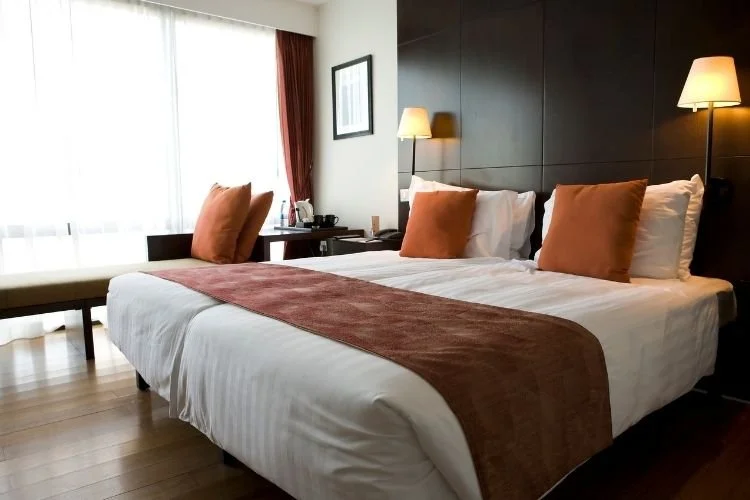
Ireland's hotel sector is outperforming the UK on RevPAR, but rising operating costs are narrowing the gap between revenue and actual profit.
Ireland has quietly become one of the strongest hotel markets in Europe, and the numbers back it up. According to Savills' latest research on the Ireland and Scotland hotel markets, Ireland's RevPAR carried a premium of nearly £22 over the UK in the 12 months to April. That's not a small edge. It's the kind of gap that gets noticed by investors, operators, and anyone benchmarking performance across the two markets.
Scotland has a similar story to tell. RevPAR growth there has run at roughly double the rate seen in England, and both Edinburgh and Dublin have posted premium occupancy and rate levels well ahead of most other European gateway cities. Put simply, the islands of Ireland and Britain are not performing the same, and Ireland has been the one pulling ahead.
Why the premium exists
Part of the answer is demand depth. Dublin recorded 146 compression nights in the past year, more than any other major European city, driven by everything from rugby fixtures to sold out concerts. Edinburgh isn't far behind with 118. That kind of sustained demand gives hotels in both cities the pricing power that markets with softer occupancy simply don't have.
Both cities have also shown they can absorb new supply without it dragging performance down. Dublin has roughly 13.5 percent of its existing stock currently under construction, and occupancy still hasn't budged much. That's a market with real staying power, not one riding a temporary wave.
The part that doesn't show up in the RevPAR number
Here's the thing about a RevPAR premium though, it only tells you about revenue. It says nothing about what it costs to earn that revenue, and that's exactly why more owners and asset managers are leaning on GOPPAR, gross operating profit per available room, rather than RevPAR when they want to know how a hotel is actually doing.
The gap between the two numbers has become the real story across Europe. Recent benchmarking of the European hotel sector found revenue still climbing in most markets, but profit growth badly lagging behind it. In Western Europe, revenue growth slowed to around 2.2 percent, and GOPPAR growth slowed even further to the same 2.2 percent. In Northern Europe it was worse, revenue up 1.4 percent, GOPPAR up just 0.2 percent. Two hotels can be growing their top line and still be standing still, or going backwards, on what they actually keep.
HotStats data tells a similar story at the margin level. European hotel GOP margins have plateaued at around 36.5 percent, with flow-through running at just 35 percent, meaning for every extra euro a hotel brings in, only 35 cents of it makes it to the bottom line. The rest gets absorbed by rising costs before it ever shows up as profit.
That's why a £22 RevPAR premium over the UK, while genuinely valuable, doesn't tell the full story on its own. Two hotels can post the exact same RevPAR and end the year with very different GOPPAR, depending on how tightly each one runs labour, food, and energy costs. RevPAR tells you how well a hotel is selling rooms. GOPPAR tells you how well it's actually being run.
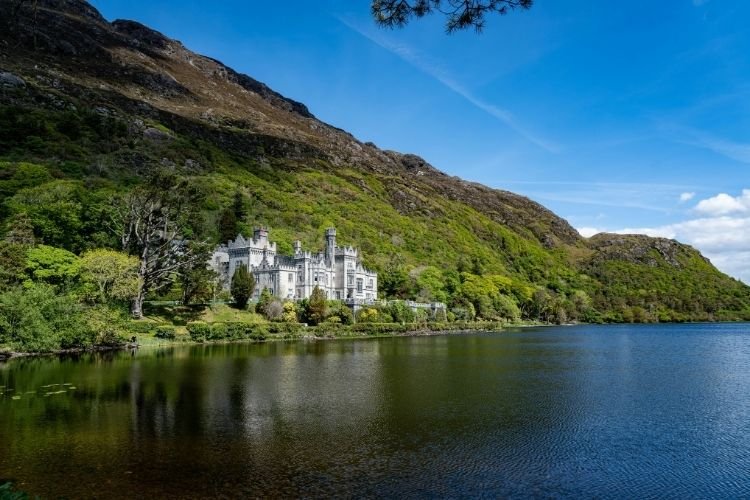
Energy costs are impacting Hotels GOPPAR
Holding onto the advantage
Ireland's revenue advantage over the UK is real, and the demand fundamentals behind it look durable rather than lucky. But an advantage on the top line only matters if it survives the trip down to the bottom line, and across Europe right now, a lot of that advantage is getting eaten up before it reaches GOPPAR.
Energy is one of the clearest places to see that happen. It's one of the largest operating costs sitting between RevPAR and GOPPAR, and unlike labour, it isn't shaped by minimum wage law or market pay rates, it's shaped almost entirely by decisions the hotel itself has made, insulation, equipment age, controls, how well the building is actually run day to day. Two hotels with identical RevPAR can post very different GOPPAR purely because one is paying more than it needs to for heating, cooling, and hot water every single month.
That makes energy one of the few costs an owner can move quickly, without waiting on demand, without negotiating rates, without a single extra guest walking through the door. As cost pressures build on both sides of the Irish Sea, the hotels that protect their RevPAR premium at the GOPPAR level won't be the ones with the best occupancy. They'll be the ones that treated their energy bill as a lever to pull, not a line item to accept.