

Pharmaceutical manufacturing facilities operate under strict regulatory frameworks
Decarbonising pharmaceutical manufacturing without compromising supply was the title of a dedicated session at the Future in Pharmaceuticals Ireland 2026 conference. The fact that it was given its own slot on the agenda tells you something about where the conversation in the sector currently sits.
This is not a theoretical discussion anymore. Ireland's pharmaceutical sector is under a 35% sectoral emissions reduction target for industry by 2030. The recast Industrial Emissions Directive is tightening performance requirements across combustion systems, solvent processes and fugitive emissions. CSRD reporting obligations are arriving fast. And all of this is happening at a time when Irish pharma manufacturing is in full expansion, with pharmaceutical exports reaching €99.9 billion in 2024 and major capital investments from companies including Lilly, Pfizer, AstraZeneca and Novo Nordisk either underway or recently completed.
The tension is real. How do you decarbonise an operation that runs continuously, operates under strict GMP compliance, cannot afford supply disruption and is expanding at the same time?
Why pharma decarbonisation is genuinely complex
Most industries face energy and emissions challenges that can be addressed through relatively straightforward measures. Pharma is different, and it is worth being clear about why.
Pharmaceutical manufacturing facilities operate under strict regulatory frameworks that govern every aspect of how processes are designed, validated and run. Any change to a validated process, including changes that touch energy systems, potentially triggers a revalidation requirement. That adds cost, time and regulatory risk to what might otherwise be a simple efficiency upgrade.
Clean rooms are a good example. They can account for 20 to 30% of a pharma site's total energy usage and are often run continuously at fixed air change rates that were set at the time of validation. Reducing those air change rates to save energy is technically feasible and there is growing evidence that GMP standards can be maintained at lower rates in well-designed systems. But doing it requires working closely with quality teams and potentially engaging regulators, which means the conversation is not just an engineering one.
The same applies to process heating, compressed air systems, water treatment and the complex solvent handling infrastructure that supports API manufacturing. Every intervention has to be assessed not just for its energy impact but for its potential effect on product quality, supply continuity and compliance status.
The three areas where decarbonisation can deliver without disruption
Despite the complexity, there are clear areas where Irish pharma manufacturers can make meaningful progress on decarbonisation without putting supply or compliance at risk. The key is sequencing interventions correctly and having the right data to make the case for each one.
The first area is energy monitoring and visibility. Before any decarbonisation project can be designed and justified, a site needs a clear and accurate picture of where its energy is going. For many Irish pharma sites, that picture does not yet exist in sufficient detail. Sub-metering across key systems, real-time monitoring and data trending provide the foundation that makes everything else possible. It is also, notably, the lowest risk place to start. Installing monitoring infrastructure does not touch validated processes. It simply gives you the information you need to make better decisions about what to change and in what order.
The second area is building services and utilities that sit outside the validated process boundary. HVAC systems in office areas, warehousing and non-classified spaces, lighting, refrigeration, building management systems and compressed air generation are all areas where significant efficiency improvements can be achieved without engaging the validation process. For large pharma sites these systems can represent a substantial share of total energy consumption and are often among the least optimised parts of the facility.
The third area is energy procurement and renewable integration. Switching to low-carbon electricity through power purchase agreements or on-site renewable generation does not require process changes or revalidation. It directly reduces the carbon intensity of the energy being consumed across the whole site. This is already happening at scale across the Irish pharma sector. The BioPharmaChem Ireland Sustainability and Responsible Care Report 2026 shows that electricity-related CO2 across member companies is down 30% over three years, driven in large part by a cleaner national grid and increased procurement of low-carbon electricity. Some member companies have gone further with significant on-site generation from wind and solar.
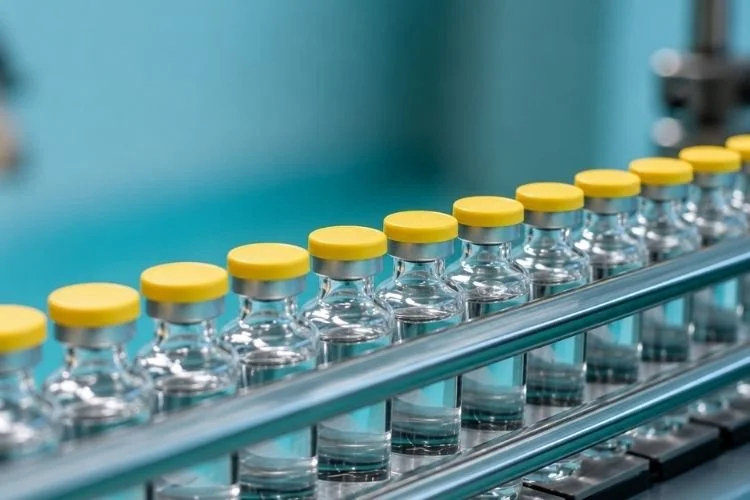
Any change to a validated process, including changes that touch energy systems, potentially triggers a revalidation requirement.
The mindset shift that matters most
One of the clearest insights to emerge from industry discussions on this topic is that the biggest barrier to pharma decarbonisation is not technical. It is organisational. Sustainability has historically sat in a silo owned by EHS and facilities managers. The sites that are making the most progress are the ones where sustainability thinking has been embedded into how processes are designed, how capital projects are scoped and how quality teams engage with proposed changes.
That shift does not happen overnight. But it starts with the right conversations between the right people, and those conversations start with data. Understanding your energy baseline, knowing where consumption is highest, and being able to model the impact of proposed changes is what gives engineering, quality and leadership teams a shared language for making decarbonisation decisions.
What this means for Irish pharma sites in 2026
The pressure to decarbonise is not going away and the timeline is not getting longer. Ireland's 35% industrial emissions reduction target by 2030 is four years away. For sites that have not yet taken a structured look at their energy position, the gap between where they are and where they need to be is real and closing.
The good news is that the path forward does not require compromising supply, quality or compliance. It requires sequencing the right interventions in the right order, starting with visibility and building from there. It also requires accessing the funded supports that are available through SEAI and other bodies to help cover the cost of audits, monitoring infrastructure and capital projects.
If you are running a pharmaceutical or biopharmaceutical manufacturing facility in Ireland and want to understand what that journey looks like for your specific site, every engagement with Watt Footprint starts with a free consultation. Every site is different, and the right starting point depends on where you are right now.