Ireland’s High Energy Prices: Businesses can’t wait for long term fixes
Ireland's energy prices are once again under scrutiny, with recent reports highlighting costs sitting 40% above the EU average. Much of the commentary has pointed to the rapid growth of data centres rising from 5% of electricity demand in 2015 to 22% today as a convenient explanation. But that framing risks oversimplifying a much deeper, systemic issue.
Ireland’s Energy Infrastructure Has Not Kept Pace
The real challenge is that Ireland has not kept pace with its own economic success. We have built a thriving, multinational-led economy without developing the energy infrastructure required to support it. The result is a strained and increasingly unreliable system, where both consumers and businesses are now bearing the cost. Years of underinvestment and complex, often slow-moving planning processes have left our network struggling to meet demand, undermining the competitiveness of indigenous enterprise.
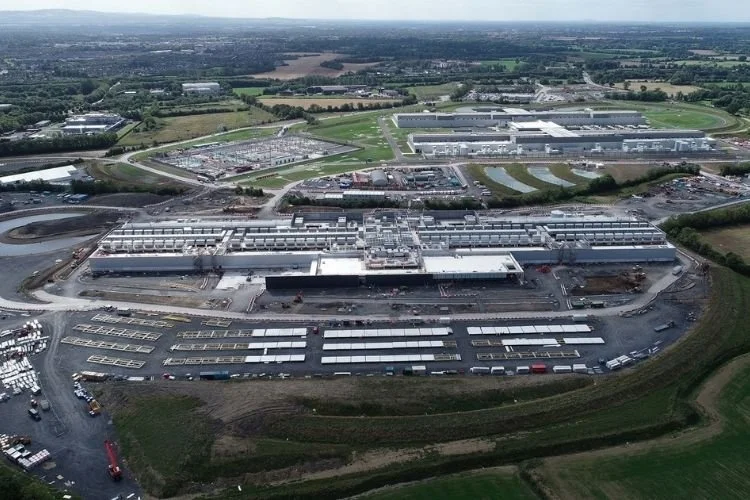
Data Centres in Ireland have huge energy consumption
Policy Delays Are Holding Back Ireland’s Energy Transition
The recent European Commission rejection of Ireland's proposed support mechanism under the Renewable Heat Obligation scheme forcing a redesign ahead of a June deadline is just the latest example of policy frameworks that fail to match the scale of our energy challenges.
Rising Network Costs and Global Volatility Are Driving Energy Pressure
These costs are not abstract. They are felt directly through rising transmission and distribution charges on bills. At the same time, global volatility particularly emerging pressures linked to instability in the Middle East is beginning to filter through to Irish homes and businesses. This combination of domestic constraints and international uncertainty is creating a perfect storm.

Renewable heat Obligation Ireland is targeting Fossil Fuel Consumption
We should not be forced into a false choice between economic growth and energy stability. Supporting business expansion and ensuring reliable, affordable energy must go hand in hand. Yet the warning signs are clear. When asked recently by Midlands 103 whether we risk returning to the conditions of 2022, the honest answer is yes because we are still failing to fully grasp the scale of the issue and its impact on business.
Energy is a significant threat to Irish enterprise
Energy costs are now one of the most significant threats facing Irish enterprise. For many, they feel like an eviction notice; inevitable, unpredictable, and beyond their control. While the planned €18 billion investment in grid infrastructure is both necessary and welcome, it is ultimately a catch-up exercise. It does little to address the immediate pressures facing businesses today.
There is no single solution. Responsibility sits with government and national infrastructure providers to deliver a modern, resilient energy system. One that supports renewable generation and aligns supply with growing demand. But businesses cannot afford to wait for long-term fixes.
Like any fundamental cost, energy must now be actively managed. It is no longer sustainable for business owners to view their energy bill as something outside their control. In an environment defined by uncertainty, taking ownership of energy strategy is not just prudent … it is essential.