

Natural Gas consumption is down 5% for BioPharmaChem Companies in Ireland
If you run a restaurant or hotel in Ireland and you've watched your electricity bill creep up year after year, you've probably blamed the usual suspects. Rising wholesale prices. Standing charges. The kitchen equipment that never seems to switch off. All fair. But there's another factor quietly reshaping the Irish electricity market that most hospitality owners have never been told about, and it's sitting in industrial estates outside Dublin, humming away 24 hours a day. Data centres.
The numbers are bigger than most people realise
New figures from the Central Statistics Office, released this month, show that data centres accounted for 23% of Ireland's total metered electricity consumption in 2025. Back in 2015, that figure was just 5%. Consumption by everyone else, homes and businesses combined, grew by only 2% over the same period. Data centre demand alone grew by 10% in a single year.
To put that in perspective, data centres now use close to as much electricity as every household in the country combined. And the trend isn't slowing down. Industry forecasts suggest that share could climb toward a third of the national total by the end of the decade, driven largely by the boom in AI computing.
Why this actually matters for your energy bill
Here's the part that connects directly to your P&L. Electricity in Ireland is traded through the Single Electricity Market, and prices are set every half hour through an auction. Generators bid in, cheapest first, and the price for that half hour is set by the last, most expensive generator needed to meet demand. That's almost always a gas plant. This system is called marginal pricing, and it's a deliberate design choice used across most European electricity markets, not a flaw.
The wholesale price that comes out of this auction typically makes up somewhere around half of a business electricity bill, with the rest made up of network charges, levies, and your supplier's own costs and margin. So it's not the whole story, but it's a big enough slice that when gas prices move, or when demand on the system rises overall, it feeds through into what suppliers charge.
Data centres are one part of that rising demand picture, alongside things like electrification of heating and transport. It's genuinely hard to isolate exactly how many cents on your bill trace back to data centres specifically versus other drivers, and you should be wary of anyone who gives you a precise figure on that. What's fair to say is that a sector now using close to a quarter of the country's electricity, and growing fast, adds real pressure to a system that prices itself on the margin. That pressure is a structural feature of the Irish market now, not a passing phase.
There's a regulatory side to this too. The Commission for Regulation of Utilities has responded by requiring new large data centres to source at least 80% of their annual electricity from new renewable projects, and in many cases to bring their own on-site generation. That's a sensible move for grid stability, but it also tells you something important: even the regulator recognises that demand growth from data centres is now a structural feature of the Irish energy market, not a temporary blip. This isn't going away, and it isn't something a hotel or restaurant owner can lobby their way around.
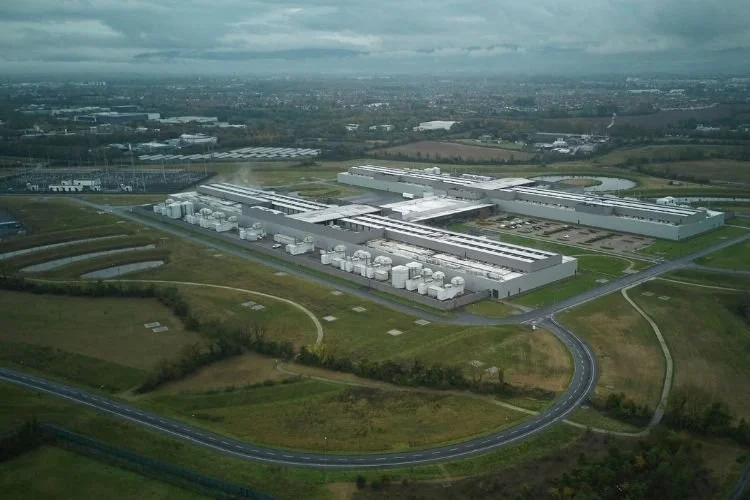
Data Centre’s in Ireland and the AI boom
The bigger picture
Data centres aren't going anywhere, and neither is the pressure they put on Ireland's grid. For hospitality businesses already dealing with rising wages and tighter margins, that's one more reason to get ahead of energy costs rather than reacting to them. The businesses that come out ahead over the next few years won't be the ones hoping electricity gets cheaper. They'll be the ones who worked out how to need less of it, and pay smarter for what they do use.
If you want a clearer picture of where your energy euros are actually going, Watt Footprint can help you find out.